
When All Traditions Dissolve, What Remains Are the Universal Principles of How the Inner World Works.
Sincerity, Honesty, Courage
Foundational Attitudes for the Path
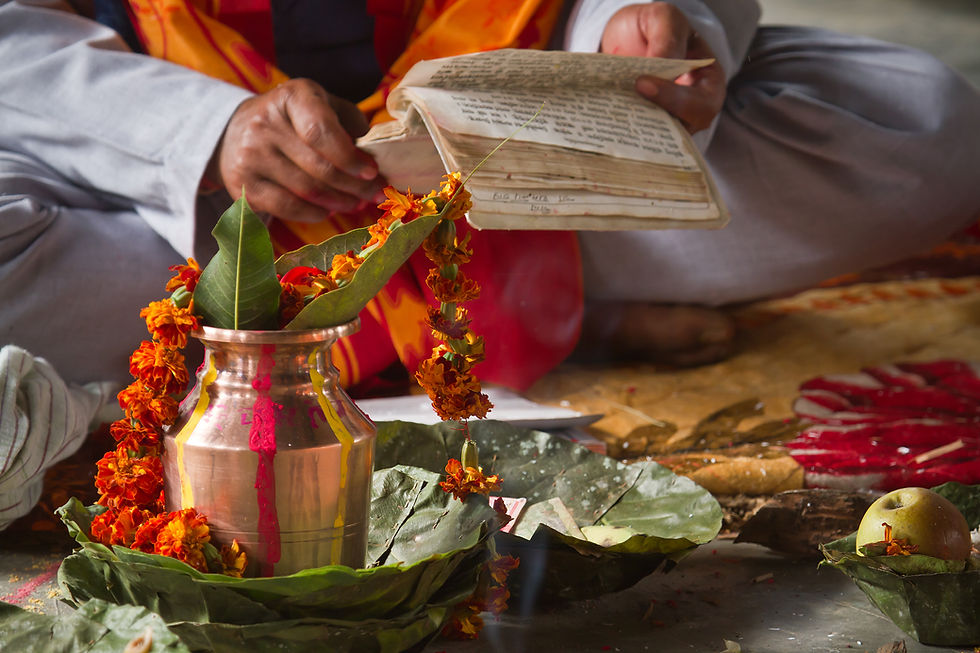
Sincerity (Kesungguhan)
Sincerity is the decision to show up fully for our inner work. It is not about being perfect, but about being genuine. When we practice with sincerity, we give real time, attention, and care to our spiritual life. We keep returning, even when we feel tired, distracted, or doubtful.
Sincerity turns every small action—listening, breathing, serving, studying—into a doorway to the sacred. It reminds us that what matters is not how much we know, but how honestly we live what we already know.

Honesty (Kejujuran)
Honesty is the courage to see things as they are. With honesty and openness, we become willing to look at our thoughts, emotions, and patterns without hiding or pretending. We do not need to judge ourselves harshly; we simply tell the truth.
This kind of honesty opens space for healing. When we admit our fears, attachments, and contradictions, we stop fighting reality and start working with it. From here, real transformation becomes possible, because we are no longer building our life on illusions.

Courage (Keberanian)
Courage is not the absence of fear, but the willingness to walk with fear in our heart. Courage invites us to step beyond our comfort zone—to face pain, uncertainty, and change with a steady, compassionate presence.
In our inner journey, courage means staying with difficult feelings instead of running away, speaking truth with kindness, and choosing growth even when it is uncomfortable. Each act of courage, no matter how small, strengthens our trust in life and in the deeper wisdom that guides us.
Practice is Not Separate From Life
With sincerity, honesty, and courage as our ground, the real practice begins — not on the cushion, but in daily life.
Learning to live aware, moment by moment. How we wash, walk, work, and speak — all become Sadhana (spiritual practice) when done with presence.
One Flow: Tapa Brata Yoga Samadhi
In the old language, this whole journey is called Tapa Brata Yoga Samadhi — one continuous flow, not four separate practices.
Tapa is to cleanse — to let go of what burdens.
Brata is to vow — to live by what is true.
Yoga is to unite — to bring awareness into every act.
Samadhi is to settle — to rest in natural clarity.
When this flow is lived, what arises naturally is Heneng (the heart at ease) and Hening (the mind clear). Not as achievements, but as the natural state when nothing extra is added.
TAPA → BRATA → YOGA → SAMADHI → HENENG → HENING
THE UNIVERSAL PRACTICE (SADHANA)
Mouna, Upavasa, Jagra
At AGF, our core practice has three stages. We begin with Sadhana - the intentional training. Through Sadhana, the mind becomes Heneng - tranquil, tentram, free from inner turbulence. When Heneng is stable, it naturally deepens into Hening — where clarity gradually grows, and we begin to see ourselves and life as it truly is.


Mouna - Training in Silence
Upavasa - Training in Simplicity
Jagra - Training in Wakefulness
Tapa — purification of speech and mind
Intentional outer and inner silence. To stop feeding the mind with new noise.
Brata — sacred vow and restraint
Simplifying food, consumption, and distractions. To stop agitating the body and mind. Dwelling near the essential.
Yoga — uniting awareness with every act
The discipline of constant awareness. Jagra is the training of staying awake to the present moment, ensuring that the light of consciousness never dims.
Sadhana is universal — it does not belong to any single religion or tradition. Whether it is called Mouna, meditation, contemplative prayer, or mindful living, every authentic path has its own training in quieting the noise, simplifying life, and staying awake.
The outer form may differ, but the inner principle is the same. What truly guides any Sadhana toward Heneng and then toward Hening is not the technique, but the quality behind it — sincerity of intention and a firm foundation in Sincerity, Honesty, and Courage.
When practiced in this way, the mind naturally settles into Heneng — tranquility — and in time, Heneng ripens into Hening — clarity.


HENENG /hə.nəŋ/ (noun, state)
HENING /hə.niŋ/ (noun, realization)
Tranquility. The calm mind.
Clarity. Luminous stillness.
From Javanese / Kawi 'heneng' - calm, settled, tranquil, still. To be tentram. Heneng is the first fruit - the state of inner tranquility when all turbulence has stopped.
From Old Javanese 'hening' - pure, clear, transparent, bening, sacred. Hening is the deeper fruit - when the tranquil pond becomes transparent and the bottom is seen.
Tranquil, Calm, Settled, Still
Clear, Luminous, Transparent, Sacred
What Hening Reveals
When the mind is clear, we don't see something new — we see what has always been here, more honestly.
When Heneng ripens into Hening, the way we see changes.
This is not a new belief, but a direct recognition of how life already is.
1. The Self is a Story, Not a Thing
We begin to see that the separate 'I' is not a solid entity, but a stream of thoughts and habits. Life is not happening TO me — it is happening AS me, here and now. This is the direct taste of Anatta (No-Self).
2. We Inter-Are
Nothing exists alone. Rooted in the Balinese wisdom of Tri Hita Karana — the harmony of Parahyangan (human-sacred), Pawongan (human-human), and Palemahan (human-nature) — we see that life inter-is. You are in me and I am in you. The Zen master Thich Nhat Hanh calls this Interbeing.
3. Awareness is Already Here
Clarity is not something we produce. Awareness is what is already aware of the practice. Hening does not create awareness — it uncovers that awareness has always been here, quiet and whole.
4. To See Clearly is to Love
When there is no separate self, what remains is not cold emptiness, but warmth. Not sentimental love, but Metta — boundless friendliness. To truly see is to love.
Not Alone: Sangha — Pawongan
Practice does not continue alone.

We do not walk alone. In Balinese wisdom, Pawongan — harmony among humans — reminds us that inner work needs good companions. In AGF, we gather as fellow travelers on the same path — to support, remind, and learn from each other.
Sangha is not a formal membership. It is the simple decision to practice together, to sit together, to share life honestly. When sincerity wavers, a friend reminds us. When honesty becomes hard, community holds space. When courage fades, we borrow courage from each other.
