Writings of Sincerity from Bali
A quiet blog feed can hold a whole community if it refuses to shout.
For a non-profit community in Bali, a writing space should feel less like a content channel and more like a place to sit. The page does not need bright promises, glossy retreat language, or the polished shine of commercial wellness. It needs room. It needs honesty. It needs a rhythm that lets a visitor arrive slowly.
The heart of the page is simple:
A living archive of sincerity, from Bali, for anyone, from anywhere.
This archive is not only a place to publish updates. It is a record of practice, service, silence, study, and shared life. It can hold reflections on Heneng Hening, notes from Mouna, stories from the Sangha, and ordinary observations from the path of simple living. It can also become a doorway for people who may never come to Bali, yet still feel close to the spirit of the community.

The page begins with stillness
The first design decision is the background. An off-white colour, `#FFFEF9`, gives the page warmth without decoration. It feels closer to handmade paper than a screen. It also protects the archive from feeling cold or overly designed.
This matters because the feed carries sensitive material. Practice notes are not advertisements. Sangha stories are not testimonials. Writings about fasting, silence, waking practice, or community life need a setting that respects their weight.
A clean layout with ample white space gives each entry room to breathe. The page should not rush the reader into clicking. It should invite scanning, pausing, and returning.
The visual feeling can be described as a monastery library:
Quiet rather than decorative
Grounded rather than aspirational
Human rather than polished
Useful rather than persuasive
Spacious rather than empty
The titles can use a serif typeface, because serif letters carry a literary, reflective tone. They suggest essays, letters, scriptures, and field notes. Meta information can use a sans-serif typeface, because it stays clear and humble. That pairing creates a gentle hierarchy without needing strong graphic effects.
The page does not need shadows, gradients, floating cards, or animated flourishes. These can make writing feel like a product. A flat card with a careful image, a category label, a title, and one brief line is enough.
The archive needs clear paths without noise
A simple set of filter pills can help visitors find what they need without turning the page into a directory.
The filters can read:
`All`
`Writings`
`Practice Notes`
`Sangha Stories`
`Retreats`
These labels are plain and easy to understand. They do not over-explain. They also reflect the natural life of a community.
Writings can hold longer reflections, essays, and letters from the community. These may explore sincerity, honesty, non-duality, or the relationship between inner practice and daily life.
Practice Notes can hold grounded guidance from lived experience. A note on Mouna might describe how silence changes the texture of a morning. A note on Upavasa might speak about restraint, care, and the discipline of not turning fasting into performance. A note on Jagra might reflect on wakefulness, not as strain, but as attention.
Sangha Stories can hold the shared life of the community. In Bali, the idea of Pawongan points to harmony among people. A Sangha story can show that harmony in small forms, cooking together, tending a garden, welcoming a neighbour, cleaning after practice, or learning to disagree without losing respect.
Retreats can hold practical announcements and reflections from gatherings. The tone should stay modest. A retreat post can describe what happened, what was learned, and what remains to be practised.

The filter pills should feel like quiet tools. They can sit below the subtitle, with soft borders and simple text. The active pill can have a slightly darker outline or a pale warm fill. Nothing needs to glow. Nothing needs to compete.
A reader should feel that each category belongs to the same family. The archive is one living body, with several doors.
Each card should do only what is needed
The card design should be restrained. No shadows. No heavy borders. No visual tricks. A card can simply sit on the off-white page, separated by spacing, a fine line, or a slightly different paper tone.
A strong card structure might include:
Element | Purpose |
Image | Gives a felt sense of place, practice, or community |
Category label | Helps the reader understand the type of entry |
Title | Carries the main thought with care |
One-line excerpt | Offers a doorway, not a summary |
The category label should use small caps. It can feel archival, almost like a library mark. It should be clear but not loud.
A sample card might read:
PRACTICE NOTES
Sitting with Heneng Hening
A short reflection on quieting the body, softening the mind, and listening before speaking.
Another might read:
SANGHA STORIES
Cooking as Pawongan
How preparing a shared meal became a lesson in attention, patience, and mutual care.
Another might read:
WRITINGS
Honesty Before Insight
A note on why sincerity is often more useful than certain language about awakening.
The one-line excerpt is important. It keeps the feed from becoming vague. It gives the reader just enough to know whether to enter. It also protects the page from becoming dense.
For Writings of Sincerity from Bali, the voice of each card should feel direct and unadorned. Avoid phrases that sound like slogans. Use real nouns. Use verbs that belong to the body and the community, sit, cook, clean, listen, walk, chant, rest, serve.
The language should be humble and exact
A community archive can carry spiritual language, but it should do so with care. Words like non-duality, Mouna, Upavasa, and Jagra have depth. They should not be used as decoration.
A sincere writing style can follow three quiet rules.
Say only what has been lived
Honesty gives spiritual writing its ground. If a practice note comes from experience, let it sound like experience. If something is still being understood, say so.
A sentence such as “We are learning how silence changes the way we listen” feels more honest than a grand claim about transformation. It leaves room for growth. It does not pretend the community has finished learning.
Let non-duality become ordinary
Non-duality can easily become abstract. The archive can bring it back to simple moments.
It may appear in the way someone notices there is less separation between serving and meditating. It may appear in the way a person washes dishes without treating the task as beneath practice. It may appear in the way the Sangha learns that clarity and confusion can both be met with steadiness.
This kind of writing does not need to explain everything. It can point gently.
Keep sincerity stronger than style
Beautiful writing can still hide. A sincere archive should prefer plain truth over impressive language.
That does not mean the writing must be dry. It can be warm, poetic, and tender. But every sentence should earn its place. If a line sounds too polished, test it against the life of the community. Would someone say this after morning practice? Would it still feel true while sweeping a floor?
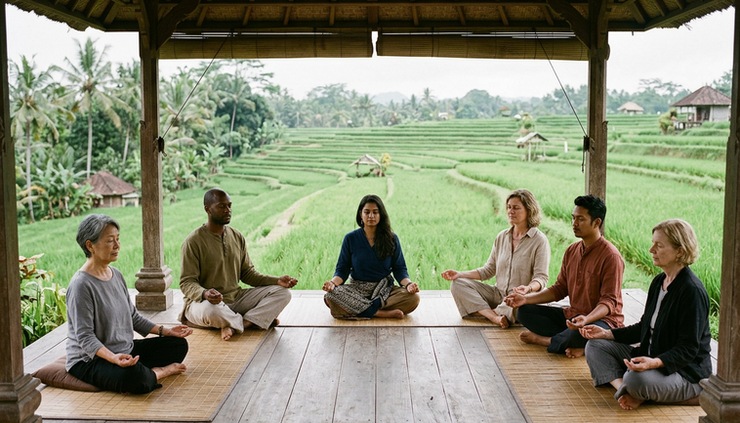
This is where Sincerity becomes more than a brand word. It becomes the editorial standard. A post is ready when it feels honest, useful, and kind.
The archive can reflect the rhythm of practice
The feed should not publish only when there is something to promote. It can follow the natural rhythm of community living.
Some entries may be seasonal. Some may come after a retreat. Some may come from a single morning of practice. Some may be short notes, almost like a field journal.
The archive can hold recurring forms:
A monthly letter from the Sangha
Short practice notes after Mouna
Reflections on Upavasa and restraint
Stories of Pawongan in daily service
Notes from Jagra, wakefulness, and night practice
Simple retreat records with dates, themes, and learnings
Quiet photo essays with only a few lines of text
These forms help the archive stay alive without becoming busy. They also make it easier for different people in the community to contribute.
A living archive does not need perfect consistency. It needs trust. If the page receives one honest note, that is enough. If it receives many, the structure can hold them.
Simple living should guide the interface
Simple living is not only a topic for posts. It can shape the page itself.
A simple interface asks fewer things from the reader. It does not interrupt. It does not chase attention. It does not measure its value by how long someone stays. It offers what is there, then allows the visitor to leave freely.
For the feed, that means:
No pop-ups
No aggressive subscription blocks
No crowded sidebars
No excessive calls to action
No stock-like images that feel staged
No commercial wellness language
No pressure to join, buy, or become someone else
The page can still guide people. It can offer a way to read more, attend a retreat, or contact the community. But the tone should remain calm. The archive serves the relationship, not the other way around.
This restraint is part of the ethics of the page. It respects people who arrive tired, curious, grieving, searching, or simply quiet.

What the feed quietly promises
A page like this makes a promise before anyone opens a post.
It says the community values Honesty over persuasion. It says practice is not separate from daily life. It says Bali is not being used as an image, but honoured as a living place with relationship, discipline, beauty, and responsibility.
It says Sangha is not a concept. It is people learning to live together.
It says Heneng Hening is not an aesthetic of silence, but a practice of becoming still enough to listen. Mouna is not absence, but restraint. Upavasa is not display, but simplicity. Jagra is not strain, but wakefulness. Pawongan is not friendliness alone, but the care needed to live in harmony with others.
The feed does not need to explain all of this at once. It can reveal it slowly, one card at a time.
A quiet archive becomes strong through return. Someone reads one practice note, then comes back weeks later. Someone far from Bali recognises a small truth in a Sangha story. Someone preparing for retreat finds the tone of the place before they arrive. Someone who may never visit still feels included in the circle of practice.
That is enough.
The work is to keep the page sincere. Keep the design spacious. Keep the language honest. Let the archive grow like a shelf in a monastery library, slowly, carefully, with each note placed there because it belongs.


Comments